
Using AI in Procurement to Drive Supply Chain Efficiency and Value
The rise of new technologies, especially artificial intelligence (AI), has the potential to completely change how procurement contracts work.

Table of Contents
- What is AI in procurement?
- The role of AI in procurement
- AI-based contract management for procurement contracts
- Key features of CLMs for procurement teams
- The future of AI in procurement
Want more content like this? Sign up for our monthly newsletter.
Key takeaways:
- AI helps procurement teams shift from cost cutters to value drivers.
- Contract management is where AI creates the most immediate value within procurement processes.
- Your AI strategy is only as strong as your people and processes.
Procurement feels the effects of uncertainty or volatility in the market before the rest of the organization does. Businesses are consistently asked to do more with less—forcing procurement teams to prioritize end-to-end margin management more than anything else, according to McKinsey.
“The new procurement environment can expose weaknesses in an organization’s processes, tools, and digital infrastructure,” writes Riccardo Drenten, a McKinsey partner.
“Some executives worry that they don’t have the information they need to make effective decisions: they have a limited view of the organization’s total spend, too much data that is inaccurate or of poor quality, and difficulty integrating data from multiple sources to create a comprehensive and accurate category view.”
It’s not surprising that many procurement teams see technology as the way through this uncertainty. To deliver better margins, teams need tools that can make it easier to move sourcing deals through the pipeline.
The core of any effective supply chain management strategy is an efficient procurement process. The rise of new technologies, especially artificial intelligence (AI), has the potential to completely change how procurement contracts work.
What is AI in procurement?
AI in procurement refers to the use of artificial intelligence techniques like machine learning, natural language processing (NLP), and data analytics for sourcing and spending decision-making. As a procurement professional, you’re likely to interact with a large language model (LLM) that uses natural language or the conversational applications built on top of them.
While organizations have some GenAI concerns, like ensuring data security and privacy, nearly a quarter are actively planning to implement GenAI for procurement in the next six months, according to Gartner research. This same study predicted that 70% of all sourcing events will include AI assistance as soon as 2028.
The role of AI in procurement
Procurement has come a long way from its traditional roots of manual processes, paperwork, and phone calls. Take, for example, how Sid Ramesh, Gusto’s Head of Procurement, uses AI throughout the procurement process to work seamlessly with their legal team. Since legal approval often works in tandem with procurement, artificial intelligence in procurement adds transparency and a paper trail without slowing either team down.
“We used to spend a lot of time just trying to herd different stakeholders and pass through the needed reviews. Not being able to track those clearly or legibly has been a big pain point over the past years. Often, you’re just working through email and ‘passing the popcorn’,” said Ramesh.

With AI integrated into their procurement process, they could move more proactively. “The notion that procurement is a blocker or legal is a blocker, that’s no longer a conversation. There’s a process, and they trust our procurement team to get us through that process easily and efficiently and help us navigate,” he said.
The notion that procurement is a blocker or legal is a blocker, that’s no longer a conversation.”
sid rameshhead of procurement, gusto
AI-based contract management for procurement contracts
Part of why Gusto’s workflow works so well is that they’ve optimized one of the messiest parts of procurement: Contract management.
“Contract management is one of those things that is, usually, not very well taken care of by the procurement function. Not because of the technology, but because of the process,” said Gaston Alvarado, Sourcing Director at Lincoln Electric.
That’s where AI can help a lot. Anything that is happening manually in your process right now is something that AI can either help or replace. The entire procurement contracting process can get convoluted, and you can lose track of things if you don’t have technology to help you out.”
Gaston Alvaradosourcing director, lincoln electric
AI-powered contract lifecycle management solutions (CLMs) are transforming this aspect of procurement, making it more efficient, accurate, and streamlined.
Key features of CLMs for procurement teams
What does a digital procurement process look like with a layer of AI? These are some of the key features you’ll find.
Automated document processing
AI-based contract management systems can automatically extract key information from procurement contracts, such as terms, conditions, and deadlines. This eliminates the need for manual data entry and reduces the risk of errors.

Contract search and retrieval
AI makes it easy to search for specific clauses or provisions within contracts. This accelerates the process of finding critical information and ensures compliance with contractual obligations. That way, you can jump to prioritized sections instead of requiring line-by-line review of new agreements as you redline a contract or summarize contacts or terms for wider audiences or to prep for negotiation.

Contract lifecycle workflows
AI systems provide end-to-end contract lifecycle management, from contract creation and negotiation to approval and renewal so you can work more quickly. This is especially useful for collaboration and visibility across departments.

Risk assessment
One of procurement’s most important roles is to assess supplier risk. In an uncertain global economy where sociopolitical factors can force businesses to change entire supply chain setups in a matter of days, understanding the risk for a given supplier or contract terms can help protect your business.
Autonomous sourcing
AI isn’t coming for your role just yet. Right now, autonomous sourcing looks like identifying contracts ready for renewal, creating alerts and reminders for re-negotiation, and assisting with calculations on estimated costs based on historical pricing, to arm you with more data as you choose suppliers. Automating low-level sourcing tasks frees up your team to conduct more impactful work. And soon, we’ll see more of this: Gartner estimates that 25% of all sourcing events will run fully autonomously by as soon as 2027.
Analytics and compliance monitoring
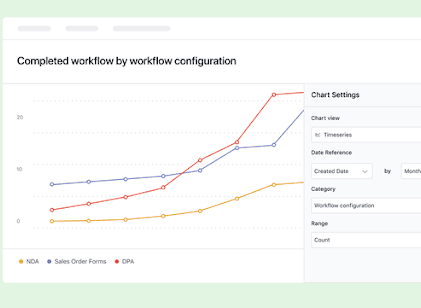
AI can take massive amounts of data and turn them into insights your team can use to improve your operations. If you’ve ever asked, “What’s the average time to complete a purchase order?” or wondered, “Which vendors have the longest-standing relationships?” AI can help you answer these questions and more for data-driven decision-making.
This goes for compliance, too. AI can detect changes in spending patterns, regulatory environments, and trigger alerts for corrective action.
Integrations with spend management platforms
Integrating a contract lifecycle management system with a spend management platform like Coupa allows for seamless data flow and collaboration between procurement and contract management processes. This streamlining of workflows reduces manual data entry, minimizes errors, and accelerates the procurement cycle.

Benefits of CLMs for procurement teams
When the procurement process is slow or disorganized, the entire organization can feel it. CLMs help procurement teams go from stitching together documents and information from multiple disjointed systems to moving pro-actively toward impactful supply chain management.
With AI-powered CLM, procurement teams can:
- Make better data-driven decisions. AI analyzes vast amounts of data, allowing organizations to make informed decisions based on historical procurement data, market trends, and supplier performance.
- Save time. AI automates repetitive contract management tasks, reducing the time and effort required. This allows procurement professionals to focus on more strategic activities.
- Optimize costs. AI can identify cost-saving opportunities, such as supplier negotiations, volume discounts, and process efficiencies.
- Manage risks. AI’s ability to assess contract risks helps organizations avoid costly legal disputes and non-compliance penalties.
These benefits add up to an organization well-positioned for success. McKinsey found that the top leaders in procurement had a stronger emphasis on strategy, digital, and data analytics compared to the rest of the market, according to the report linked above.
The best procurement organizations understand that success in today’s complex and fast-moving environment requires mastery of data-driven decision-making. They have invested in the digital infrastructure and analytical tools and capabilities needed to achieve this goal.”
Riccardo DrentenMcKinsey Partner
Challenges and considerations for implementing AI in procurement
Adding AI into your procurement workflow can have tremendous benefits—but if your organization hasn’t started looking at it as an option, you’re not alone. When we asked legal professionals about their AI adoption in our State of AI in Legal report, we found that concerns about security (48%) topped the list, followed by well-founded concern about GenAI’s tendency to hallucinate and cause errors (44%). In an organization where the stakes are high and risk tolerance is low, like procurement, it can be hard to convince leadership that this technology is worth investing in.

Organizational challenges also pose a hurdle to AI adoption, with training deficiencies (24%) and policy navigation (23%) as the biggest concerns. But that’s not new when it comes to sourcing new technology for your business.
Sometimes, procurement professionals can be too close to the action to realize that early adoption of a new technology for their own operations can revolutionize the way they do work. If your procurement process is still stuck in spreadsheets or long email threads, you run the equal risk of security issues, human error, and losing business to your competitors because of delays or inefficient processes.
This frustration is what led Oklahoma’s Office of Management and Enterprise Services (OMES), which oversees all procurement for the State of Oklahoma, to modernize how it handles procurement contracts and legal reviews. OMES’s legal team, responsible for reviewing all procurement contracts, managed their entire review process through Microsoft Planner—and often found themselves caught in an endless cycle of emails, phone calls, and Microsoft Teams messages with both procurement officers and vendors. These communications then had to be manually transferred into Microsoft Planner for record-keeping, a process that was often incomplete.
Implementing a CLM tool with AI gave their procurement team the ability to move more quickly and focus on their Environmental, Social, and Governance (ESG) efforts. “The improvements in business processes and automation that will be effectuated through analysis of the metrics and performance indicators are still in their infancy,” said Amanda Otis, State Purchasing Director.
“The total savings and increases in efficiency are slated to increase year over year for the foreseeable future.”
amanda otis | Oklahoma’s Office of Management and Enterprise Services
Top AI tools for procurement teams
So, which procurement AI tools should you choose? Before you begin, consider your specific pain points as a team, and the other tools your organization is already using. If you don’t already have a spend management tool, start there. Here are a few options for AI-powered procurement tools that can help your procurement operations:
Coupa
AI-powered analytics give you insights into spending trends, plus a generative AI assistant to evaluate risk in supply chain management.
JAGGAER
Predictive AI helps with sourcing, supplier scorecards, and forecasting spending trends.
SAP Ariba
Source-to-pay suite with supplier discovery, risk assessment, and contract analytics helps your team make more data-driven decisions.
Ironclad
We’d love for you to consider Ironclad on this list. Automate contract lifecycle management tasks like creation, editing, tagging, and retrieving contracts, so you can maximize supplier relationships. Plus, our CLM integrates with major spending management platforms like Coupa and OneTrust, so you can optimize multiple parts of your procurement workflow.
How to implement AI as a procurement leader
Think of AI as an assistant ready to take on the tedious, repetitive tasks that your team already hates doing—the kind of work that takes away from the impactful, interesting supply chain management work they like to do. No one wants to spend their day copying-and-pasting various vendor contracts and chasing down signatories. Instead, let AI:
- Create self-service vendor onboarding or purchase agreements to allow procurement teams to initiate vendor agreements so you can make and finalize procurements on your team’s schedule. Then, you can set alerts to review and renegotiate contracts before they automatically renew.
- Set standard terms and clauses and then automatically flag language that deviates in third-party agreements so you can quickly review and confirm details for purchase agreements or distribution agreements.
- Calculate estimated costs based on historical pricing to choose suppliers without human bias and fill in intelligence gaps on vendors or industries that don’t have an assigned in-house expert.
- Pull real-time information on terms, conditions, and budget utilization during analysis and find deeper areas of spending optimization so you can focus on delivering better margins.
- Maintain records for a comprehensive audit trail that supports transparency, facilitates internal and external audits, and provides evidence of compliance with contractual obligation.
- Procurement professionals naturally focus on technology as a means of efficiency and productivity. In doing so, however, don’t miss the people behind it. Introducing a new system for your operations won’t work if you don’t get your team on board.
“Oftentimes, we will say that technology is the solution, but you also need the people and the process to support it,” said Ramesh, who worked closely with the legal team at Gusto to strengthen their teams with more hiring, cross-functional communication, and working together to design their contracting process. “It would not have been possible without the earlier conversations and strong foundations laid with the legal team. We leaned on them and let them know that we need to leverage the contracting platform, but asked how we can do that with the end-to-end procurement process in mind.”
Imagine doing day-to-day work without the Internet. Or email. Soon, that’s what AI will feel like.
Adding AI into your procurement workflow takes away those time-consuming tasks and gives your team more room to focus on the intangibles with sourcing, like supplier relationships. As we look to the future, procurement teams need to move beyond basic contract management. What they need to do their jobs effectively is intelligent insights that help them maximize their supplier value—and drive more impact on the business.
For more procurement trends, priorities and resources, including GenAI:
Ironclad is not a law firm, and this post does not constitute or contain legal advice. To evaluate the accuracy, sufficiency, or reliability of the ideas and guidance reflected here, or the applicability of these materials to your business, you should consult with a licensed attorney. Use of and access to any of the resources contained within Ironclad’s site do not create an attorney-client relationship between the user and Ironclad.