



The Organizational Design Problem Costing Your Business Millions
Most organizations aren’t set up to protect contract value once it’s signed, and it ends up leaking through unclear handoffs and disconnected systems. Here’s what to do about it.

Receive the latest updates on growth and AI workflows in your inbox every week
Procurement’s main role in an organization is to source, purchase, and manage all the goods and services required to operate a business.
But once a contract is signed, what happens to a contract? WorldCC research reveals that organizations lose an average of 11% of contract value. When we dug into the data, we learned that most teams hand off their contracts to other functions to execute, leaving a major gap that contributes to this leakage.
This isn’t solely a procurement problem. It’s an organizational design problem that procurement is uniquely positioned to solve. Understanding where value is lost enables organizations to prioritize interventions and calculate their own exposure.
In this post, using data from a recent report created in partnership with WCC, Closing the Procurement Value Gap: How Smarter Contracting Can Prevent 11% Value Leakage, we’ll talk through where contract leakage usually comes from, why this problem exists in the first place, and how procurement teams can lead the charge to plug these structural value leaks before they end up costing the organization millions.
Where contract value leakage comes from
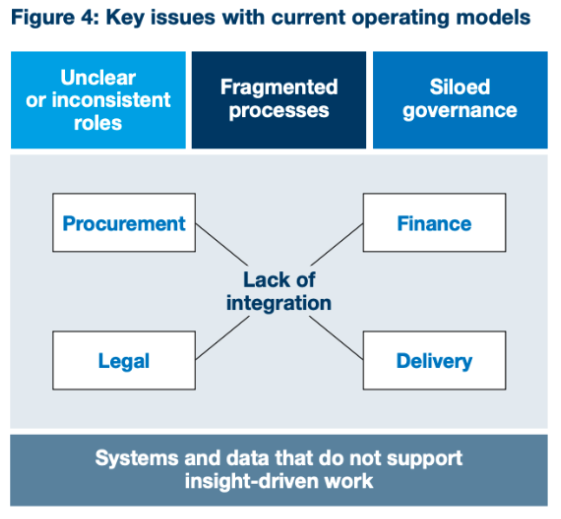
When we refer to contract leakage, we’re not talking about a single point of failure (or trying to point fingers at one team or another.) Value leakage comes from multiple failure points across the entire contract lifecycle. Part of what makes it so difficult to solve is that there isn’t one owner or fix. Three interconnected organizational gaps enable this leakage:
1. Unclear or inconsistent roles leave obligations unmanaged
Value carefully negotiated during sourcing often evaporates during delivery.
The first point of failure starts with engagement in the process. Procurement is often left to scramble when brought in at the last minute, with teams failing to follow proper processes, forcing them to play catch-up and missing a key up-front opportunity to bring in value.
Source: Closing the Procurement Value Gap: How Smarter Contracting Can Prevent 11% Value Leakage
Then, the hand-off between procurement and other teams leaves a gap. The teams responsible for operations, customer management, or technical execution may never be properly briefed on contractual commitments. Obligations remain unclear or unknown, innovation clauses go unused, and performance deviates from expectations because the organization fails to adequately operationalize the deal.
Says Tom Mills, Procurement Protagonist and voice behind the newsletter Procure Bites during a recent webinar with WCC, “I think procurement typically, historically, has always stopped at the end of a contract signature, almost to say we’ve done our job here, we’ve run the RFP, we’ve made a decision, we’ve negotiated, and then it’s almost like handed over to the business. We need to move from contract management to contract lifecycle management, which is a massively different thing. We need to stop treating contracts as documents that just kind of sit on the side. We need to see them as live governance frameworks to make sure that we deliver the value.”
Without that lifecycle approach, unmanaged obligations create multiple points of contract leakage, including:
- Unrealized benefits from unmanaged clauses (1-2%), such as gain-share arrangements, volume discounts, or innovation commitments that are never realized
- Unauthorized or unrecorded charges from scope creep that’s left ungoverned (2-3%)
- Penalties and disputes from missed obligations or lack of compliance that’s not identified or enforced (1-2%)
- Missed savings from poor negotiation (2-3%) or overpayment from price adjustments that go untracked (1-2%)
A lack of visibility into contract data opens up teams for risk and leaves potential revenue or benefits on the table—and because no team owns this gap, it’s often left unidentified.
2. Inflexible contract and structure design
Organizations rely on standard templates that don’t adapt to the shifting nature and models of supply. Instead of making these contracts more flexible to accommodate technological disruption, regulatory shifts, or supply chain configuration, the typical response has been to add more risk clauses into the documents, hoping to shift more risk to suppliers.
This approach only makes the problem worse, creating operational gaps that no amount of legal language can fix. Risk transfer provisions can:
- Prolong negotiations, leading to price uplifts or accepting supplier paper without adequate pushback
- Result in price premiums as suppliers price in the additional risk exposure
- Ignore contract governance and performance oversight mechanisms
- Fail to distinguish risk allocation from risk management
Attempting to shift the risk to suppliers doesn’t actually manage it. Without joint mechanisms to identify, monitor, and mitigate risks, the organization remains exposed regardless of what the contract says. Poor performance is still poor performance, regardless of whether the supplier or the business is to blame. Who loses in all of this? The customer.
The result is contracts that are legally defensive but operationally hollow—documents designed to win disputes rather than prevent them, yet ultimately ineffective because of the buyer’s weaknesses in contract performance management.
3. Inadequate and outdated systems
What’s keeping teams disconnected are technology solutions (or lack thereof) that don’t support today’s fast-moving, complex contracting landscape. Most procurement systems were designed for an environment of static templates and enforced controls. They assume rigid compliance is a good thing, whereas today it is a major constraint.
Overall systems fragmentation means that contract-related data sits across multiple applications, defying efforts to undertake rapid analysis of performance or risks. Contract value is often lost not because of contract mechanics but because of bad data, poor communication, and misaligned behaviors. Teams either:
- Try to add new tools into a broken process, and then when those new tools fail to realize time-to-value, abandon them
- Use existing tools that aren’t meant for today’s interconnected process, creating manual workarounds and busy work that no one has time for
Organizations need systems that can connect legal, finance, procurement, and sales into a unified contract management lifecycle that serves the needs of each team and makes these invisible contract leakage points visible.
Why we have this structural design in the first place
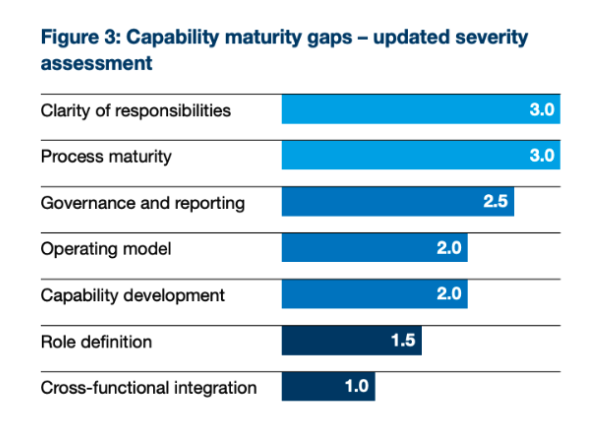
If these systems don’t work, why do they exist in the first place? In our research, we found several structural gaps in the contract management process that are responsible for these issues, including:
Source: Closing the Procurement Value Gap: How Smarter Contracting Can Prevent 11% Value Leakage
1. A post-signature skill gap
Procurement professionals are trained in sourcing strategy, supplier evaluation, and negotiation. They are rarely trained in obligation management, performance governance, relationship development, or commercial adaptation. The skills required to win value at signature are fundamentally different from those required to realize value over a contract’s life.
2. Measurement that stops at signature
Procurement success is typically measured by cost reduction or “negotiated savings” at the point of award.
“Traditional targets are all about savings metrics. But what happens with that is you’ll deliver a report that you saved $10 million this year, and your CFO turns around and says, ‘Great. Next year I want you to deliver $12 million in savings.’ But that completely misses the point. It drives the wrong behavior that focuses on short-term impact, and it also ignores inflation and other economic realities.”
This creates no incentive or mechanism to track whether negotiated value is actually delivered, whether contracted innovations materialize, or whether supplier relationships remain healthy. The metrics reinforce a transactional mindset at exactly the moment when a relational approach may be needed.
3. A lack of governance and authority once the contract is signed
After signature, procurement teams typically move on to the next contract, rather than enforce the current one. That means obligations go untracked. Value creation clauses, like innovation commitments, continuous improvement mechanisms, gain-share arrangements, and so on remain dormant because no one knows they exist.
In many organizations, procurement has limited involvement in contract governance, performance reviews, or supplier relationship management. These activities fall to operations, project teams, or business units—functions that typically lack commercial training, contractual awareness, or the authority to hold suppliers accountable.
How to stop value leakage before it starts
The consequence of all of this is a structural disconnect. The functions structuring the contract and relationship exit at signature, while the functions responsible for delivery lack the skills, tools, or mandate to protect value. Plugging these contract leakages requires much more than “fixing” procurement, but a fundamental rethinking of who is responsible for contract outcomes and how accountability flows across each function.
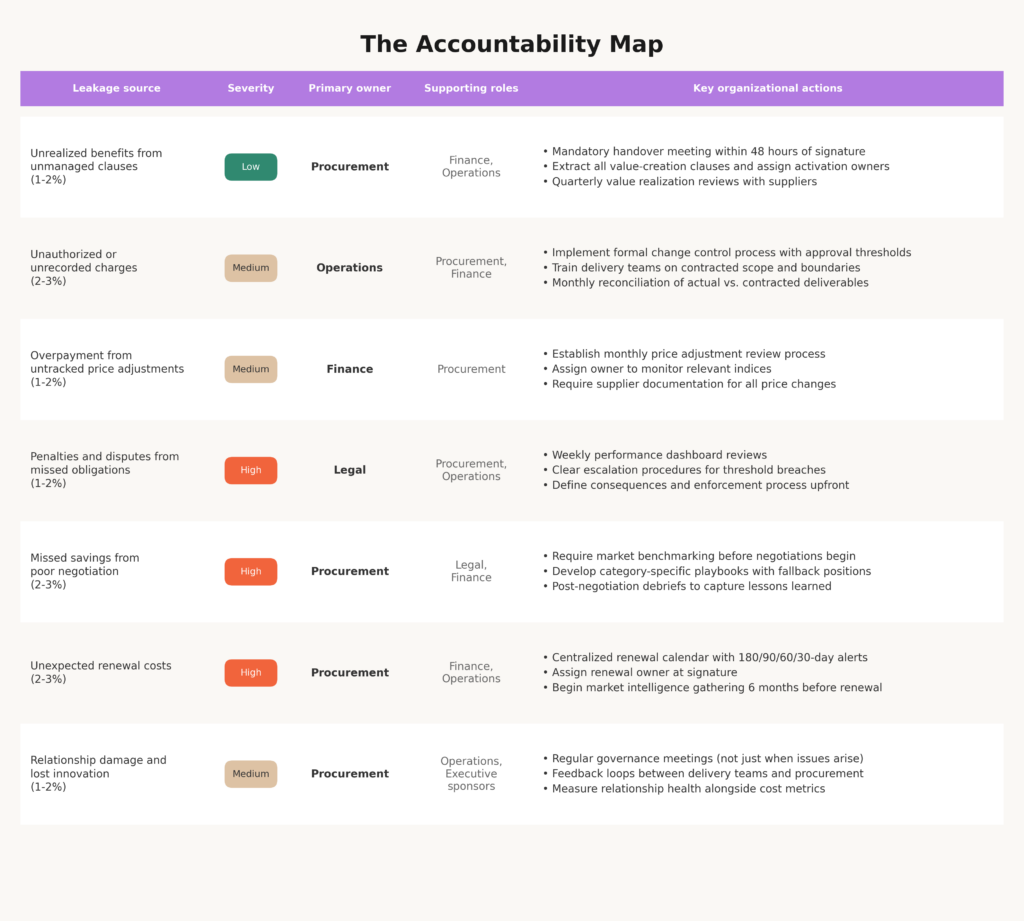
What this means is that organizations must redesign how they approach contract management for the future, including:
- Where contracting sits relative to other functions
- Accountability and which team owns which part of the process
- How teams can stay connected throughout the process
- Training and upskilling in new technology and new workflows
- A governance structure for contract execution
Where teams often trip up is trying to use technology to solve all of these issues, when really that’s just bolting on a new tool onto legacy workflows that don’t solve the problem.
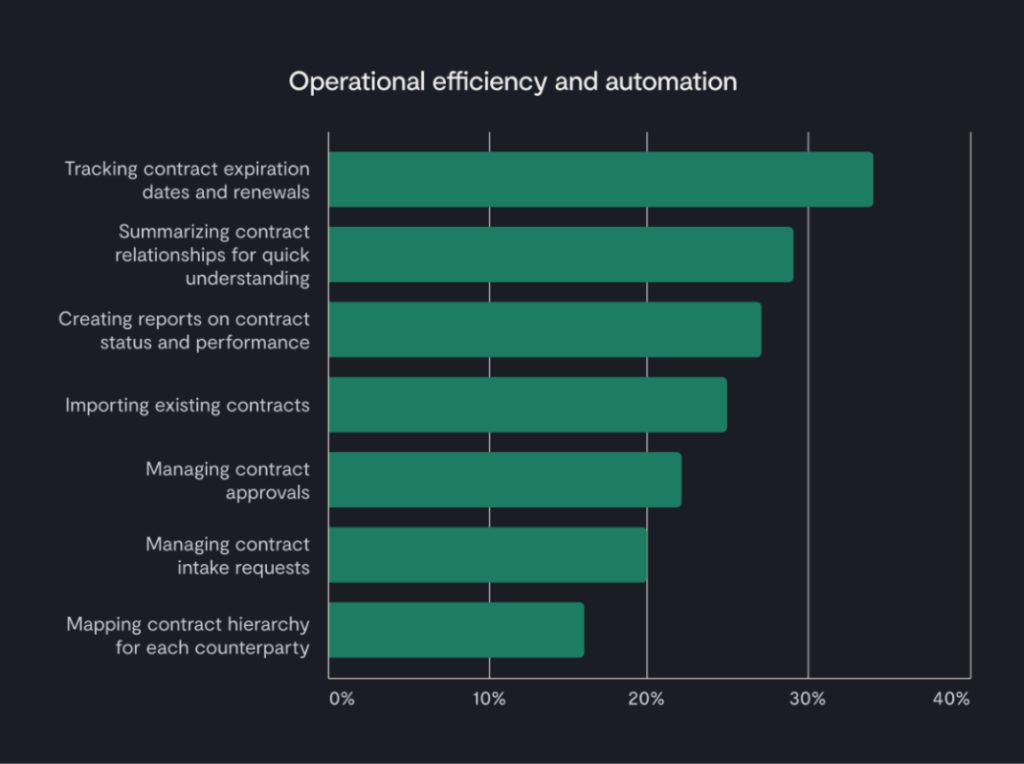
Take artificial intelligence, for example. 73% of procurement professionals we surveyed for our 2025 State of AI in Procurement Report told us they were already using it for procurement use cases like managing supplier commitments, spend analysis, or processing purchase requisitions or orders.
Source: 2026 State of AI in Procurement Report
Adding AI into your procurement workflow can have tremendous benefits—across procurement teams we surveyed for in our 2025 State of AI in Procurement report, the average benefit score is 8/10. Common AI use cases include generating reports and dashboards (63%), drafting and defining technical requirements (63%), and data analysis (62%).
AI has real potential to speed up many procurement processes, but not on its own. Teams need to assess their overall maturity and readiness first in their process before implementing new tools and technology if they hope to solve value leakage.
“The number one thing I’ve seen people get wrong is underestimating the importance of having the right foundation in place. I think sometimes you can almost think tech is the only solution, when tech is part of the solution. I always recommend addressing the fundamentals first,” says Tom. “We’re only just at the beginning of what AI can do for procurement teams. The main pain points for procurement are still there, and teams will need to move faster to keep up.”
Tim Cummins from WorldCC adds that “AI can really begin to help us break down a lot of the silos. It can create the joined up data flows that we need for better decision making, faster decision making. But if we’re not careful, a lot of the AI use cases we’re seeing are just replicating traditional siloed functional behaviour, and rather than joining things up, it just reaffirms the compartmentalization.”
Value leakage is a structural issue that’s not limited to procurement
The answer is not simply doing procurement “better.”
Procurement teams can’t fix value leakage on their own. Their primary mandate ends where this gap begins—at the signature.
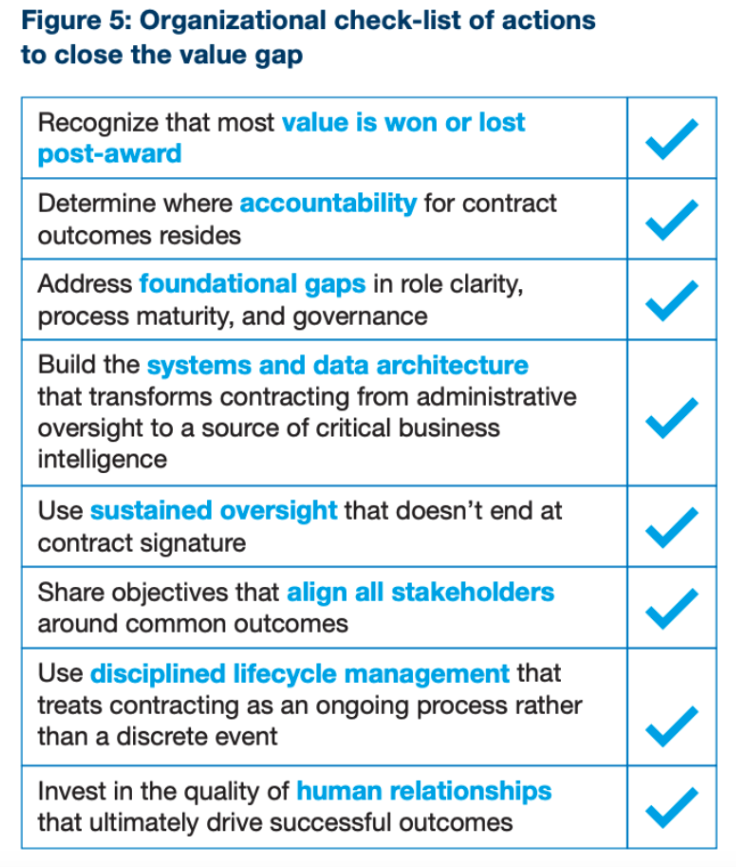
Organizations that modernize their contracting approach, moving from template-driven control to adaptive governance, smarter digital workflows, and proactive performance management, will not only stem the leakage but turn contract management into a source of competitive advantage.
Says Tom, “If we think about all of the challenges facing procurement professionals today, from their supply chain to inflation to AI, what businesses really need are strong, influential procurement professionals that can lead the business to make the right decisions.”
To learn more about how procurement can prevent contract value leakage through operational organization, download the full report.
Ironclad is not a law firm, and this post does not constitute or contain legal advice. To evaluate the accuracy, sufficiency, or reliability of the ideas and guidance reflected here, or the applicability of these materials to your business, you should consult with a licensed attorney.


