




Procurement & AI: What to Look for in a Great Tool for Post-Signature Wins

Want more content like this? Sign up for our monthly newsletter.
Procurement does the hard work in an organization of sourcing, purchasing, and managing all the suppliers and vendors that make a business successful. Unlike business units, it’s your job to save the organization money—and drive as much value as possible.
But the major opportunities to do that happen after suppliers sign on the dotted line, usually when procurement hands off responsibility to another team. In fact, WorldCC research reveals that organizations lose an average of 11% of contract value.
You need a procurement system that can identify key information about those contracts—like renewal dates, supplier exposure, and supplier obligations—if you want to meet your savings goals.
This is where you can stop the contract leakage happening in your organization.
We recently asked over 800 procurement professionals about the tools they’re using to stop the contract leakage in their organizations. Here’s what to look for in a procurement tool that will help you find (and make the most of) post-signature opportunities for your business:
The ability to see all of your contracts in one place
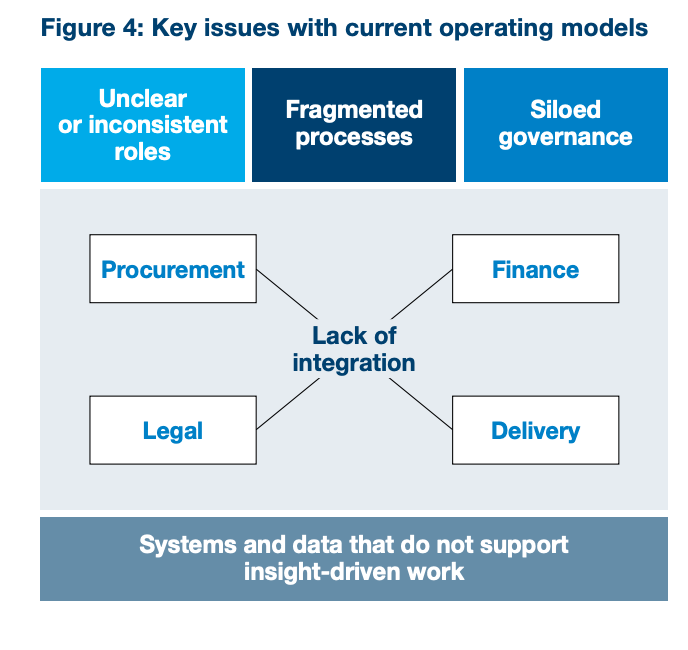
One of the major reasons for contract leakage lies in the handoff between procurement and other teams. A contract gets signed and…disappears into another business unit, or worse, stays trapped on someone’s individual computer. It’s impossible to find opportunities for spend management when you don’t have all the information in front of you.
A complaint we often hear from customers is that contracts are spread all over the place.They may have acquired a new company, or restructured their business, or it’s a homegrown system with multiple business units. For these folks, they need to start by understanding what is in their contracts in the first place so they can have a clean list of vendors with open contracts. among our respondents was that the benefits of using AI greatly outweighed the risks. But those risks are very real.
Source: 2026 Procurement Value Gap Report
All of this means a great procurement tool gathers all of your contracts in one place, for each team to access, so you no longer have to muddle through who owns what and when. Ideally, too, this repository would directly integrate with existing systems your teams already use, like your supplier management system.
Analyze the most important clauses for relevant obligations
All of your contracts in one place is the baseline of what you need from a procurement tool. But the real value starts when you add a layer of artificial intelligence on top of your contracts, making previously inaccessible data available for you to analyze. Procurement AI usage rose from 73% in 2025 to 92% in 2026, and 98% of procurement professionals who use AI say it has improved how they work.
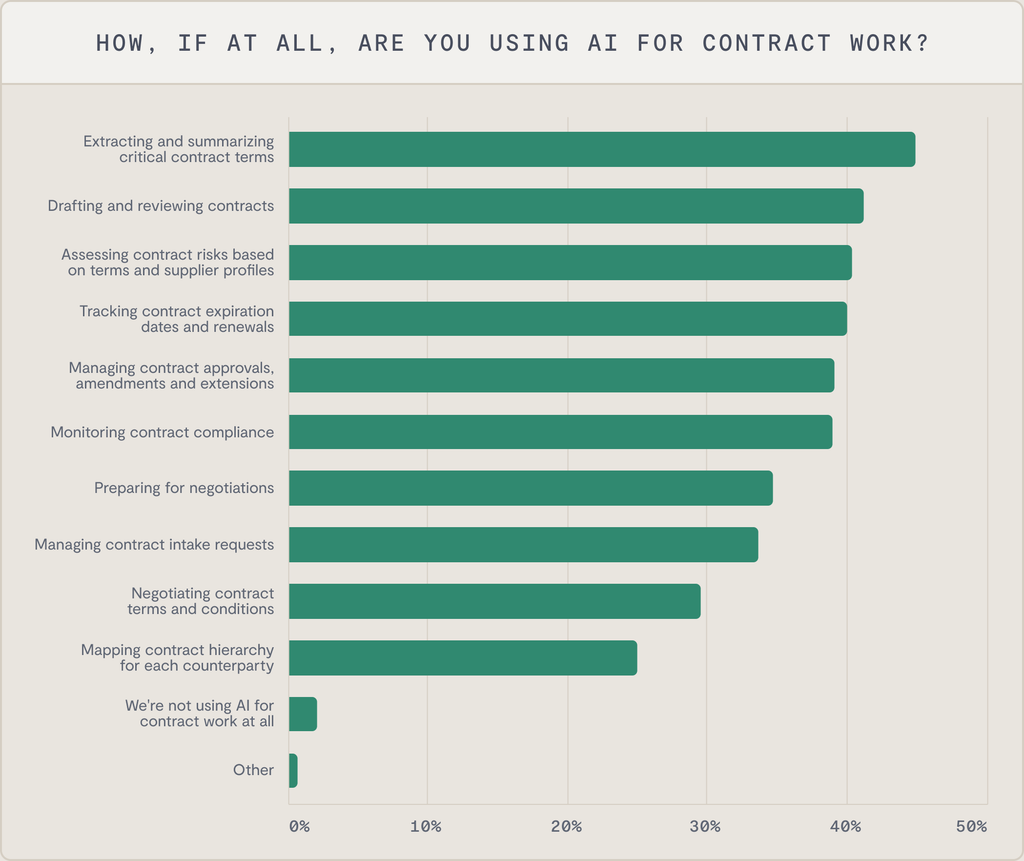
In fact, when we asked procurement professionals how they were using AI in their day-to-day, the biggest use case was extracting and summarizing critical contract terms. Then, you can make a better judgment call about supplier leverage or action steps.
Source: 2026 State of AI in Procurement Report
Unmanaged obligations create multiple points of contract leakage, including:
- Unrealized benefits from unmanaged clauses, such as gain-share arrangements, volume discounts, or innovation commitments that are never realized
- Unauthorized or unrecorded charges from scope creep that’s left ungoverned
- Penalties and disputes from missed obligations or lack of compliance that’s not identified or enforced
Instead of downloading multiple individual PDFs and hunting clause by clause to find whether or not your supplier is going to raise prices next year, or if they’re truly fulfilling their obligations, AI can analyze all of your contracts and surface relevant data points, critical contract terms, or assess risk from supplier exposure.
Manage approvals and amendments
With all of your contracts in one place, it’s much easier to share the load of shepherding a contract through all of the stages of approvals and negotiations. Instead of playing phone tag with five different internal stakeholders, you can see exactly who you’re waiting on—whether it’s an internal stakeholder or with a third party.
In the future, this workflow could also be AI-driven, with automatic reminders built in. Just 21% of contract-AI users say AI has been most impactful for managing contract approvals, amendments, and extensions today. 52% expect it to be one of the biggest future benefits, tied for the single highest expectation of any stage measured.
Renewal date reminders that actually start a workstream
This is the clause that keeps procurement professionals up at night. That’s because autorenewals can lock your business into years of high spend whether or not you’re actually using the supplier or tool to its full advantage. What’s more, a renewal date of 30 or 60 days out isn’t really enough time to re-negotiate effectively.
Autorenewals have made Tom Mills of Procure Bites paranoid at times. “I have woken up in the middle of the night, logged on to my laptop, and double checked an upcoming renewal date in a panic,” he laughs. “I recognize that this is unhealthy, but I’ll never forget a mistake I made with an autorenewal that cost my company $300k.”
The right procurement tool is going to surface these renewal dates or other important milestones well before you’re in the hot zone, helping you make judgement calls against questions like:
- Which suppliers do we have autorenewal agreements?
- Of these, which contracts are the highest spend?
- And most importantly: Which ones are renewing in the next 90 days?
That way, your team can evaluate each contract and determine if it needs to be re-negotiated or not without creating a huge time crunch.
It’s time to stop contract leakage before it happens
Since adopting AI, 63% of procurement professionals report spending more time on strategic and complex work. In procurement, that means spending more time on the relationships that form the backbone of your work—with suppliers and internal stakeholders—so you’re able to add real value to the business’ bottom line.
Read more about how procurement professionals are using AI to be more strategic about their work in our 2026 State of AI in Procurement Report.
Ironclad is not a law firm, and this post does not constitute or contain legal advice. To evaluate the accuracy, sufficiency, or reliability of the ideas and guidance reflected here, or the applicability of these materials to your business, you should consult with a licensed attorney.


