
How Document Automation Software Can Help Your Business
If you’re looking to scale without the chaos, document automation is one of the most practical, high-impact tools you can add to your tech stack.

Table of Contents
- What is document automation / document process automation?What is document automation software?How does document automation software work?How document automation software benefits businessKey features of document automation software tools
- Types of documents you can automate
- Best document automation software tools for enterprises
- Next steps: Find the best document automation software for your business
Want more content like this? Sign up for our monthly newsletter.
Key takeaways:
- Key features include templates, data integration, automated workflows, and collaboration tools..
- AI-powered document automation software streamlines contract workflows, saving time and reducing human error.
- It enhances compliance, cuts costs by preventing revenue leakage, and improves collaboration.
To truly transform legal operations, modern teams are looking for software that does more than just create documents. They’re adopting intelligent, AI-powered document automation software tools that streamline entire contract workflows, reduce costs, and improve compliance through document process automation.
What is document automation / document process automation?
Document automation, sometimes called document process automation or document generation, is the use of software to create and manage documents with minimal manual input. It enables teams to automate repetitive tasks, like generating contracts, routing for approvals, and tracking versions, while ensuring compliance and consistency across every document.
Contract workflow automation often begins by selecting the appropriate contract template and generating an initial document. This is followed by all the business procedures required to make the contract compliant and legally binding.
What is document automation software?
Document automation software, also known as contract lifecycle management software or document generation software, manages the entire contract process from drafting and approval through execution, removing the need for legal teams to handle each step manually. Unlike static templates or manual workflows, this software dynamically integrates relevant data, ensures compliance with rules, and supports real-time collaboration to streamline the workflow and reduce errors.
Increasingly, AI plays a critical role in document automation software, also known as contract lifecycle management software, by suggesting relevant clauses based on context, automatically populating fields with relevant data, flagging risky terms, and comparing document versions to highlight changes. It also identifies workflow bottlenecks over time, helping teams streamline future contract cycles.

How does document automation software work?
Today’s best document automation software is powered by AI and legal technology, which enables it to move faster and smarter. Rather than automating isolated tasks, it enhances the entire contract lifecycle with intelligence, speed, and adaptability.
Here’s how it works, step by step:
1. Document generation
Pre-approved templates serve as the starting point for contract creation and are often customized based on contract type or business unit.
AI enhances document generation by suggesting relevant clauses based on context, prior usage, jurisdiction, and risk level. This helps teams build stronger, more consistent contracts from the beginning.
2. Standardization and templatization
Templates follow established rules and logic, including who can edit specific sections, when approvals are required, and which fallback clauses should be applied.
AI learns from past contracts to improve how templates and conditions are applied. It helps recommend the best fit for each scenario and reduces the need for manual decision-making.
3. Data integration and population
The software pulls information like names, dates, and pricing from connected systems such as CRMs and HR platforms. This reduces manual entry and prevents errors.
AI takes this a step further by identifying patterns, auto-filling fields with high accuracy, and prompting users for missing information based on the context of the contract.
4. Automated workflows
Once a contract is created, it moves through a predefined workflow that routes it to the appropriate reviewers, collects approvals, and escalates issues as needed.
AI improves these workflows by analyzing past performance to predict delays, suggest faster approval paths, and optimize how contracts move through the system.
5. Output generation and distribution
After the contract is finalized, it is sent for signature, stored securely, and made available in dashboards for tracking and reporting.
AI supports this stage by tagging metadata, identifying important deadlines, and sending automated reminders. It also helps ensure contracts are delivered to the right people at the right time.
How document automation software benefits business
Time savings and efficiency gains
Document automation delivers measurable time savings by streamlining routine contract tasks and reducing dependency on legal for standard agreements. For example, within a month after launching their CLM, Skillsoft reduced their contract process time from days to 18 minutes. By eliminating manual data entry, enabling self-service for non-legal teams, and using pre-approved templates and clauses, they reduced contract process time without creating any compliance risks.
This kind of transformation is not just a win for legal, it accelerates sales cycles, boosts productivity, and improves collaboration across departments. One account executive at Namely even described the change as “the single best rollout and efficiency gain” they had seen in five years. By minimizing manual review and automating key steps like contract creation, data entry, and approvals, businesses free up time for more strategic work while keeping deals moving forward at a much faster pace.
Reduced human error and inconsistency
Ironclad’s General Counsel Jasmine Singh says, “For decades, we’ve accepted certain truths as immutable: that legal work inherently involves countless hours of manual document review, that meeting client demands requires sacrificing work-life balance, and that burnout is simply the price of practicing law. But what if these assumptions are no longer valid?”
That question cuts to the heart of what modern legal technology is solving. Manual contract drafting and data entry, once considered unavoidable, are now being replaced by document automation.
This technology enforces the use of standardized templates and controlled data inputs, dramatically reducing risks like outdated clauses, incorrect party information, or missing terms. AI-powered systems can additionally flag deviations or risky language in real time, ensuring every contract adheres to approved standards and minimizing costly mistakes.
Improved compliance and standardization
Maintaining compliance with internal policies and external regulations can be challenging, especially as contract volumes increase. Document automation embeds legal guardrails directly into templates and workflows, enforcing consistent use of approved language and approval paths. This reduces the need for manual reviews of every contract while ensuring contracts remain compliant with company and regulatory requirements.
Cost reduction and ROI impact
Reducing costs and increasing return on investment are two of the most compelling reasons organizations adopt document automation. Manual contract management is inefficient and expensive. Time spent chasing approvals, correcting errors, or redlining outdated templates adds up quickly, especially across hundreds or thousands of contracts.
Contract value leakage is one of the most significant, yet least visible, threats to business performance. It refers to the financial losses that occur when inefficiencies, gaps, or oversights in the contract lifecycle go unaddressed.
According to the WCC, companies lose an average of 8.6% of annual revenue to contract inefficiencies. These losses are often buried in excessive legal review time, administrative overhead, slow deal cycles, and missed obligations that go unnoticed after contracts are signed.
Document automation is one of the most effective ways to reduce this leakage. By streamlining contract creation, review, and approval processes, organizations can minimize human error, improve compliance, and significantly reduce turnaround times. Even preventing a conservative 2% of that leakage more than pays for the investment in automation technology.
There are two main types of contract value leakage: Cost leakage and revenue leakage.
- Cost leakage stems from poor management of outgoing spend, such as vendor agreements, purchase orders, and service contracts. Common causes include missed milestone payments, suboptimal terms, limited insight into supplier performance, and reactive renewal processes.
- Revenue leakage occurs when inbound revenue from sales contracts is not fully captured or optimized. This can result from pricing errors, nonstandard concessions, noncompliance, or incomplete data at the time of signature.
As Michel Feaster, Chief Product Officer at Ironclad, puts it: “Most supplier and vendor contracts come with obligations—like meeting service level commitments, implementation milestone payments and purchase volume discounts, or clauses dealing with global incidents like tariffs and pandemics—that carry real monetary value, yet are often overlooked after the contract is signed. If you think about $8 out of every $100 of your contract value going out the window, this can quickly become a million-dollar issue.”
If you think about $8 out of every $100 of your contract value going out the window, this can quickly become a million-dollar issue.”
Michel FeasterChief Product Officer
With document automation and contract lifecycle management tools, companies can ensure those obligations are not only visible, but also proactively managed. Automation helps track key dates, trigger alerts for renewals or payments, and enforce standardized language that limits risk exposure.
AI plays a major role in unlocking these efficiencies, positively impacting your business’ bottom line. Legal teams now rely on AI to draft contracts faster, surface risky clauses, and accelerate review cycles. In fact, 96% of legal professionals report that AI helps them meet their business objectives more easily. From clause-level analysis to intelligent workflow routing, AI-powered automation is reshaping how organizations manage contract value, ensuring they maximize it and prevent losses.
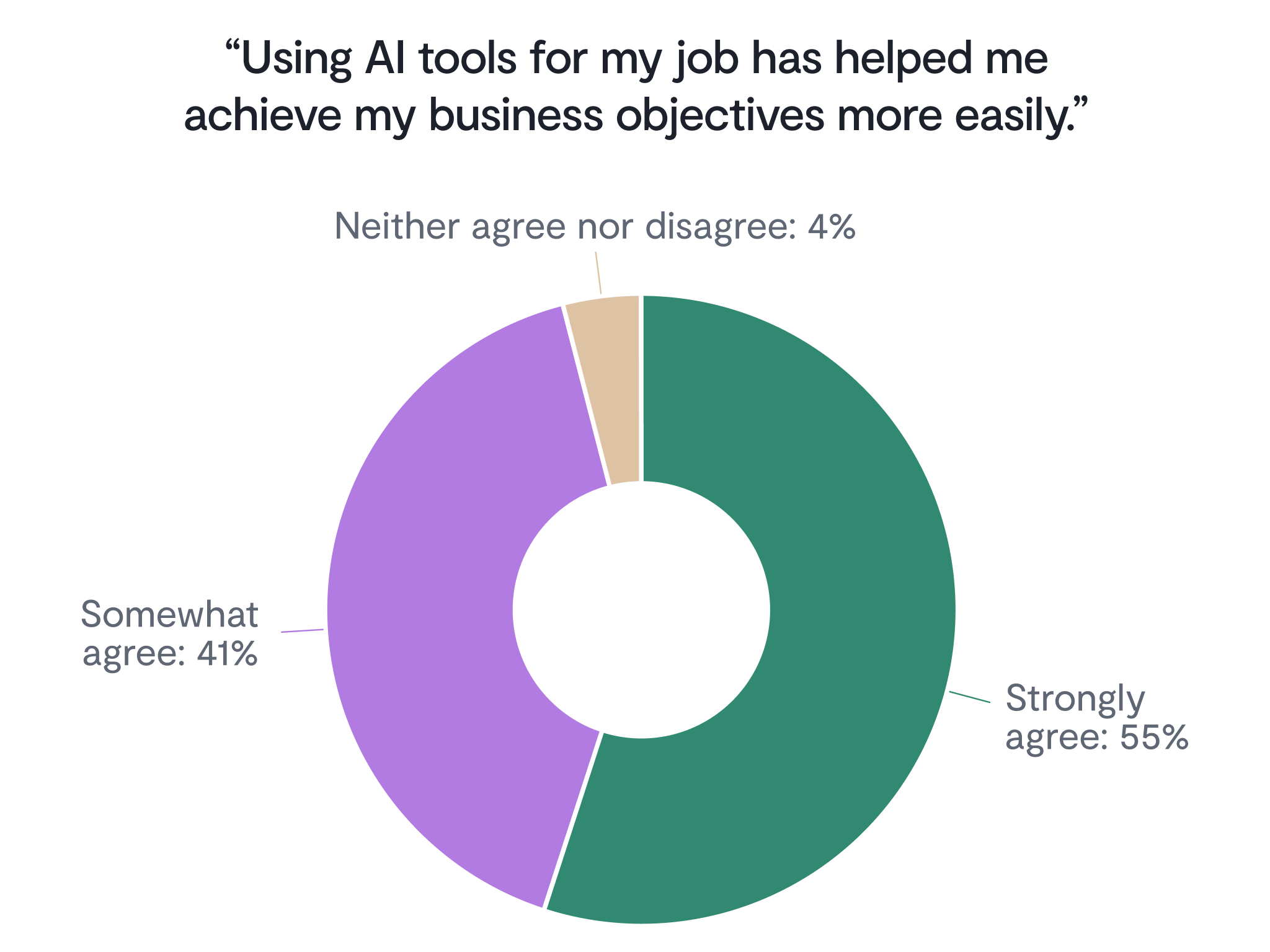
By tightening control over every phase of the contract lifecycle, document automation not only helps teams work faster and with greater accuracy. It also protects revenue, reduces unnecessary spend, and ultimately delivers a return on investment that scales with every contract signed.
Enhanced collaboration and accessibility
Traditional contract processes often involve siloed teams and fragmented communication, leading to version control issues and delays. Document automation software centralizes contracts and enable real-time collaboration with features like inline commenting, version tracking, and notifications.
This transparency aligns legal, sales, procurement, and other stakeholders on a single platform, reducing misunderstandings and accelerating negotiations. Improved accessibility also means contract data and insights are readily available for reporting and audit purposes.
Collaboration is another area where AI shines, as more than two-thirds of legal professionals report that AI helps them communicate better with cross-functional stakeholders, a task that 80% agree is “very time-consuming.”
“In one negotiation where we were stuck on specific terms, I asked [AI] to suggest different ways we could structure the compromise language. It proposed a list of options, including several approaches I hadn’t considered, helping us find a creative solution that worked for both parties,” explains Michael Ohta, Senior Counsel, Ironclad.

Key features of document automation software tools
The best document automation tools tackle common pain points by offering features like:
- Easy-to-use templates that keep contracts consistent and compliant without needing constant legal review
- Smart data integration that automatically pulls details from your existing systems, reducing errors and saving time with AI-powered features
- Automated workflows that route contracts to the right people for review and approval without delays or manual follow-ups
- Real-time collaboration tools that eliminate version confusion and messy email chains
- Robust reporting and analytics that provide visibility into contract status, bottlenecks, and compliance risks so you can improve your processes continuously
Together, these features help reduce risk, boost efficiency, and let your team focus on higher-value work.
Watch the 2025 State of Ai in Legal Virtual Roundtable
Hear from a panel of industry leaders from Google DeepMind, Perkins Coie, and Intuit.

Types of documents you can automate
Document automation is incredibly versatile and can handle a wide range of contract types, including:
- Non-disclosure agreements to protect sensitive information
- Sales contracts, such as purchase agreements and statements of work
- Vendor and supplier agreements to manage procurement relationships
- Employment contracts and offer letters for HR onboarding
- Service contracts and master service agreements to define ongoing business terms
- Licensing agreements and partnership contracts that involve complex terms
These common contract types benefit from automation by reducing manual effort, ensuring compliance, and speeding up approvals across legal, sales, procurement, and HR teams.
Best document automation software tools for enterprises
Enterprises need platforms that go beyond basic document generation to support end-to-end contract lifecycle management, from creation to compliance tracking. The top contract management tools combine automation, AI, and integrations with your existing tech stack to reduce risk, save time, and maximize the value of every contract. Below, in alphabetical order, are five leading platforms trusted by global enterprises to power their contracting processes.
Conga CLM
Conga’s enterprise contract automation tools are designed to streamline complex document generation and approval processes, particularly for revenue-focused teams. With Salesforce integration, advanced document assembly, and workflow automation, Conga helps sales and legal teams accelerate deal cycles and maintain contract consistency at scale.
DocuSign CLM
DocuSign CLM provides a comprehensive platform that combines contract automation with e-signature functionality. It enables organizations to standardize templates, automate routing, and manage contracts across departments. Enterprises often choose DocuSign CLM for its ease of use, security certifications, and compatibility with existing DocuSign workflows.
Icertis
Icertis is a powerful CLM solution used by large, global enterprises to manage risk, compliance, and performance across complex contract portfolios. Its AI helps identify obligations, enforce compliance, and extract insights from contract data. Icertis integrates with major ERP and CRM systems like SAP, Oracle, and Microsoft Dynamics, making it appropriate for large-scale operations.
Ironclad
Ironclad is a leading enterprise contract lifecycle management platform built for legal and cross-functional teams. It automates the entire contract process, from intake to negotiation to execution, with strong AI capabilities for clause suggestion, risk flagging, and workflow optimization. Its flexible workflow designer and deep integrations with tools like Salesforce and Google Drive make it highly scalable for growing businesses.
Sirion
Sirion is best known for post-signature contract intelligence and vendor performance management. It uses AI to track deliverables, obligations, and service levels, helping enterprises realize full contract value. With its deep analytics and focus on supplier-side contracts, Sirion is popular with procurement and vendor management teams.
Next steps: Find the best document automation software for your business
By replacing manual steps with intelligent, connected workflows, document automation helps businesses save time, reduce costly mistakes, and stay aligned across teams. Whether you’re dealing with NDAs, sales contracts, or vendor agreements, automation helps you move with confidence and clarity. And with AI in the mix, it’s easier than ever to spot risks, stay compliant, and get contracts over the finish line. If you’re looking to scale without the chaos, document automation is one of the most practical, high-impact tools you can add to your tech stack. Contact an expert to learn more.
Ironclad is not a law firm, and this post does not constitute or contain legal advice. To evaluate the accuracy, sufficiency, or reliability of the ideas and guidance reflected here, or the applicability of these materials to your business, you should consult with a licensed attorney. Use of and access to any of the resources contained within Ironclad’s site do not create an attorney-client relationship between the user and Ironclad.