



Procurement Expert Tom Mills on Where AI Is Actually Effective
Procurement expert Tom Mills was skeptical of AI hype — until he saw where it actually helps. Here’s where AI earns its place in procurement, and where it doesn’t.

Want more content like this? Sign up for our monthly newsletter.
When Tom Mills of Procure Bites first encountered our modern version of artificial intelligence, he was initially skeptical.
“Procurement has been leaning on large language models for years, and many of the common benefits for AI were already in existence,” he explains. “As a procurement professional, you always have to be skeptical and think critically about the value that’s being solved by AI. I felt like there was so much hype, and not enough critical thinking.”
Some of the most popular procurement tools already embedded AI into their data and analytics. What the newest wave of artificial intelligence has done is pull LLMs out of very technical tools that require advanced computer science know-how and make those insights more accessible to everyone. In our State of AI in Procurement report, we found adoption varied by industry, with teams in finance (91%), technology (89%), and business services (83%) leading the way.
But Tom is still wary of going all-in on AI without the right guardrails.
In this post, we’ll talk about what’s changed since ChatGPT burst onto the scene with generative AI in 2022—and how procurement professionals can best use AI to their advantage in their day-to-day by leaning into the critical thinking and soft skills that make procurement so valuable to an organization in the first place.
The value of AI in procurement
That’s not to say it’s all doom and gloom. It’s one thing to use ChatGPT or Claude in isolation, but when it’s wrapped into an existing procurement tool that understands the organizational and role-based context, Tom has really seen the benefits in two ways.
The first is helping procurement teams come up for air.
“What I’m excited by is how AI has the potential to fix one of the major issues in procurement, which is that professionals have consistently struggled with the sheer volume of work,” he says. “If we’re able to use AI well, we can reduce the manual elements of our workloads, which allows us to run more competitive benchmarking, have more supply conversations, and spend more time with our stakeholders, which are all huge ways procurement adds value to an organization.”
The second is becoming more strategic with AI-driven insights. According to research from the WCC, organizations lose an average of 11% of contract value, as an example. Done right, AI can give procurement teams deeper visibility into their contracts, so they can better understand their supplier exposure, renewal timelines, and overall risk.
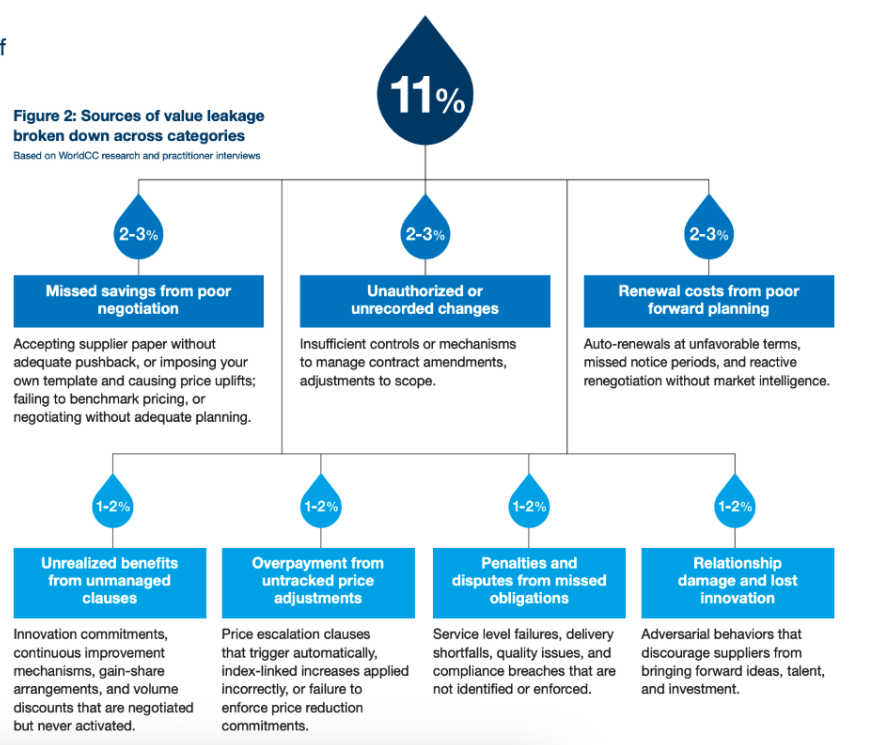
Source: Closing the Procurement Value Gap: How Smarter Contracting Can Prevent 11% Value Leakage
“I hope that AI allows us to free up more time to be more strategic and innovative than it has been traditionally because we’ve been so bogged down by all of those manual small tasks,” says Tom.
The pitfalls of AI in procurement
However, Tom warns that procurement professionals shouldn’t outsource their thinking to AI.
The biggest challenges in procurement are the more subtle things, like influencing internally, communicating effectively, making clear collaborative decisions, and I’m not certain AI can or should replace the role of the human there.
Tom Millsprocurement protagonist, procure bites
Procurement is so much about relationship management, that if you insert a machine into that loop, you may not like what happens next. “Our job is to build trust,” Tom explains. “AI has happened so fast, without any real guardrails or thought around what protections we’re putting in place.”
But the real risks from AI are much more human in nature. What Tom’s heard from his community is that AI has been used as an excuse from senior leadership to cut back headcount at all levels and throughout the organization, taking away the potential time-saving benefits by squeezing the folks who are left. “Procurement professionals have to be careful, because we’re bombarded by these messages that say AI can do all of these things for you, and that’s true, but it still requires human judgment and operational skills,” he says. “We’ve got lots of pressure from the business about reducing overhead, but without the proper headcount, your relationships will suffer.”
When procurement professionals should use AI (and when to keep a human in the loop)
Which tasks have the most value for procurement professionals largely depends on industry. In business services, for example, the most common tasks reported were spend analysis, conversational assistants, or drafting more technical requirements.

Source: State of AI in Procurement 2025
By contrast, those in finance use AI more for tracking and managing supplier obligations and workflow automation.

Source: State of AI in Procurement 2025
Let’s dig into where AI can be useful for procurement professionals and what still requires a human in the loop:
AI can handle boring procurement tasks pretty well
The best use cases, says Tom, are simple, repetitive tasks that procurement professionals honestly don’t like doing anyway, like:
- Automated document processing
- Contract search and retrieval
- Contract lifecycle workflows
- Supplier risk assessments
- Compliance monitoring
“Purchase order processing and contract review are great examples where AI can provide so much more visibility,” says Tom. “It can also help with analytics, where in the past I’ve needed a full-time analyst to produce reports from our supplier data, and a ton of time invested looking after the PA process, and now AI can handle that. I’d much rather put an analyst on something more strategic.”
Keep a human in the loop for more nuanced procurement tasks
Where Tom recommends working collaboratively with AI is with nuanced tasks like negotiation.
I think AI can help you plan and prepare your negotiations with information about the other party, but I think if we fall into a world where we rely on AI to actually do the negotiating, or to draft every communication, we’ll misunderstand the complexities that go into that process.
Tom Millsprocurement protagonist, procure bites
The best way to collaborate with AI is to get answers to questions you wouldn’t normally be able to find yourself. AI’s ability to take massive amounts of data and turn it into insights makes it an ideal collaborator as you work on more strategic decisions.If you’ve ever asked, “What’s the average time to complete a purchase order?” or wondered, “Which vendors have the longest-standing relationships?” AI can help.
The procurement tasks you should do yourself
Another common AI use case Tom feels isn’t ready for outsourcing is in drafting stakeholder communication, either internally or with stakeholders. While it can solve the “blank page problem,” it’s much better for your communication to feel human.
When it comes to how we talk with our suppliers and our business stakeholders, I think AI will only damage your long-term relationships. It’s not the productivity hack you think it is
Tom Millsprocurement protagonist, procure bites
Tom acknowledges that most people disagree with him on this. “I know it’s easier, but people can tell when it’s from you and when it’s from a machine, and that matters when procurement’s main role is around relationship-building,” he says.
Approach AI with the same critical thinking you use in your day-to-day role in procurement
The procurement landscape is dramatically changing with AI, and that’s a good thing, says Tom. But he cautions procurement professionals to make sure they understand why they’re using AI in a given circumstance, in the same way that they would push back on a business stakeholder looking to change suppliers.
“It’s important to embrace what’s new, to be open to change, but we should be asking the right questions to protect our organizations,” he says. This includes questions like:
- What is AI actually solving for procurement? Why do we need this?
- What is the total cost of ownership (TCO) with this implementation? Remember onboarding, training, data storage, and compliance can all add hidden costs.
- What guardrails are put in place to protect confidentiality of our business data and supplier data?
“I’m excited by what AI can do,” says Tom. “But I want to make sure that procurement professionals approach this thoughtfully, as they do with every new tool.”
Read the whole series with procurement expert Tom Mills below:
- How Procurement Influencer Tom Mills Went from Buyer to Head of Procurement to Coach
- The 3 Biggest Challenges Procurement Professionals Faced in 2025—and How to Address Them in 2026
- How to Maximize Your First 90 Days in a New Procurement Org
- Process Before Tech: Why the Fundamentals Matter for Procurement Teams
- Why Procurement Professionals Get Burnout—And What to Do About It
- The Top 7 Negotiation Mistakes Procurement Professionals Make—And How to Fix Them
- People You Meet in Procurement
- These Procurement Horror Stories Could Happen to Anyone
- Spend Management Tips From Procurement Expert Tom Mills
Ironclad is not a law firm, and this post does not constitute or contain legal advice. To evaluate the accuracy, sufficiency, or reliability of the ideas and guidance reflected here, or the applicability of these materials to your business, you should consult with a licensed attorney.


