
The Soft Skills Every Procurement Professional Needs
Hard skills get procurement pros in the door. These seven soft skills, from self-awareness to negotiation, determine whether they succeed, especially as AI reshapes the role.

Want more content like this? Sign up for our monthly newsletter.
Everyone loves to focus on the hard skills procurement professionals need—spend management, market research, data analysis, and vendor selection, to name a few—and while those are important, they often hide some of the skills required to truly be successful in procurement.
Tom Mills from Procure Bites believes soft skills matter even more in the age of AI. “It’s soft skills that often are overlooked, yet they’re what’s going to make or break a supplier negotiation, or determine whether or not you’re going to succeed with an internal stakeholder,” he says. “I always recommend spending just as much time honing these skills as I would with the more technical requirements of the role.”
Your HR team probably agrees with Tom, according to the World Economic Forum. As organizations change dramatically in response to increased AI and automation, soft skills have become more important than ever—but they’re often what’s missing when they evaluate candidates for positions across the board.
These seven skills are what take a procurement professional from good to great:
1. Self-awareness
“The most important skill anyone can have is self-awareness,” says Tom. “This is one of the defining attributes of someone who’s going to deliver impact and progress in their career.”
That can start with a few personality tests, like Marcus Buckingham’s Strength Finder, or the classic Myers-Briggs, but don’t stop there. “Yes, you should know your strengths and weaknesses, but what’s more difficult is the sense of how you are perceived by those around you,” he says. “A personality test will give you a snapshot, but not a sense of how you’re growing.”
In most organizations, we’re conditioned to ask for feedback pretty much only once a year, during annual review season. Instead, Tom suggests creating a micro-feedback loop—debriefing on an activity level, or after an important negotiation meeting.
We need to get out of our comfort zones and ask the question, ‘How did that go for you? What can I improve?’ And asking this not just of your manager, but your larger team. This positions you as a partner, and it shows you actually care.
Tom Millsprocurement protagonist, procure bites
One team to look at as a model for this is your engineering team. Many engineering organizations follow a sprint-based model, which means they work in short, scheduled time slots of work where each teammate completes a set task. At the end of every sprint, the team gets together to debrief what worked, what didn’t, and what needs to be adjusted for the next sprint to run smoothly.
While procurement is vastly different from coding, the idea of setting aside time on a regular basis to evaluate performance, instead of once a year, is something that can build your self-awareness. The more feedback you can solicit from your teammates, the more conscious you can become of how you’re perceived and any patterns that may be holding you back.
2. Adaptability
Right now, the ground is shifting underneath procurement professionals, who are asked to do more with less, and learn a brand new technology at the same time. When we asked procurement professionals about their AI adoption for our 2025 State of AI in Procurement Report, we found that the adoption rate varied up to 30 points by industry, with procurement teams for technology companies at the highest rate of adoption (89%) and retail and healthcare at the lowest (65% and 68%, respectively.)
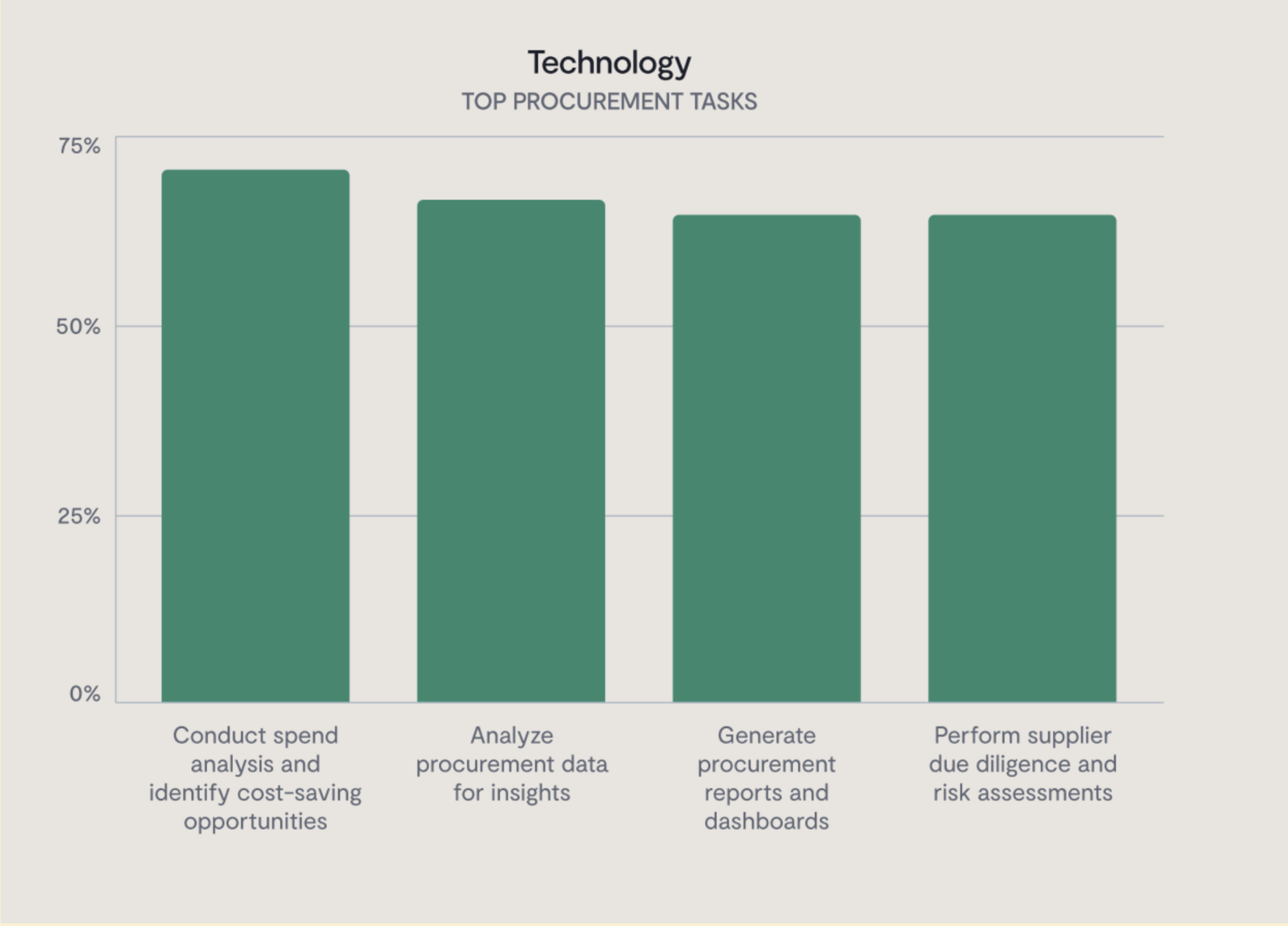
Adding AI into your procurement workflow can have tremendous benefits—across procurement teams we surveyed for the report, the average benefit score is 8/10. Common AI use cases include generating reports and dashboards (63%), drafting and defining technical requirements (63%), and data analysis (62%).
That’s why adaptability is one of the most important soft skills you can cultivate, especially now, says Tom. “In procurement, we can get very tied up in frameworks, and processes, and doing things a certain way. Well, all of that is changing,” he says. “And even if AI wasn’t in the picture, no one situation is going to be exactly the same with a supplier or a stakeholder, and you need to be able to move fast.”
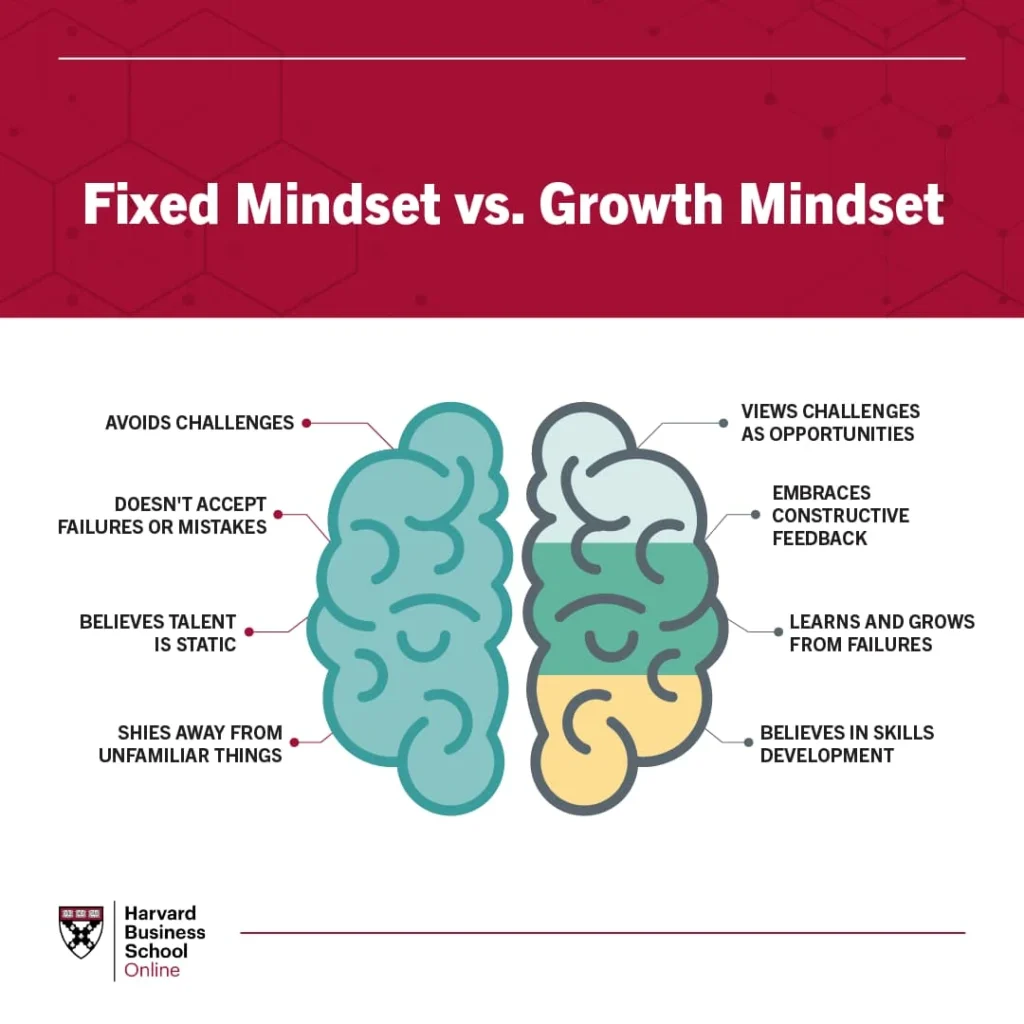
Part of this is adapting what’s called a growth mindset, instead of a fixed mindset.
- A growth mindset approaches your abilities, intelligence, and talent as learnable and fixable, so that it’s always possible to improve.
- A fixed mindset thinks of these traits as fixed, falling back on “that’s just the way things are.”
Source: Harvard Business School
In procurement, that means exposing yourself to a wide variety of different kinds of tasks, suppliers, and teams as much as you can throughout your career. Says Tom, “I believe the best procurement professionals have a generalist mentality. Throwing yourself up deliberately outside your comfort zone helps you gain confidence in new situations, even if it’s just trying a project for a different internal team.”
3. Communication
Communication continues to be an underrated skill. “It sounds so obvious, but the way you communicate in your organization absolutely determines how well the organization understands the procurement process, understands the roles within it, and why you matter,” says Tom.
So many people obsess over putting the right words in an email, when they need to be thinking bigger about what communication is. “People mistake communication for how we talk, but it’s really how we listen that matters,” Tom advises. “In procurement, we need to approach our stakeholder interactions with a relationship mindset, and how we can be of service to the organization.”
Often, it’s the fast-paced, high-pressure environment that makes communication more difficult. “In procurement, we’re very task-focused because there’s so much going on,” he says. “We’re so worried about what needs to be done that we revert to, ‘I’ve got to send this email,’ and this reduces our ability to listen. I always try to flip it with my teams and ask them to forget what’s fastest in terms of communication channels, and focus instead on what’s most effective. It may make more sense to have a short in-person chat than to email someone, depending on the topic.”
4. Emotional intelligence and interpersonal skills
Part of what makes communication so difficult is that it’s directly tied to another soft skill: Your interpersonal skills. “This is the ability to partner effectively within the business and build really strong, long-term, trusting relationships, which is what defines the best procurement professionals,” explains Tom. “Doing this is what’s going to make sure you have an impact on your organization.”
This is one of the hardest parts of working on procurement, because people are never as easy as spreadsheets and spend, but it’s people you have to influence, manage, and collaborate with to get a deal done. To work on your interpersonal skills, Tom suggests:
- Remembering the larger context of what the business needs in your interactions, vs. what may feel personal to you. For example, is someone ghosting you because they don’t like you, or because they’re busy? It’s almost always the latter, as frustrating as that may be.
- Getting to know your stakeholders as people, not just tasks: “Spend half an hour speaking to a stakeholder and forget that you work in procurement for a moment. Ask them questions like, ‘What’s big for you right now? What’s going on in your world? What’s most important to deliver this year?’ That’s the best way to understand what they need from you,” says Tom.
- Focus on the job at hand, not what’s gone “wrong.” It can be so frustrating when stakeholders bring procurement in too late, or they don’t follow an established process, like filling out a form or creating a ticket. Lead those interactions with grace, though, because your internal stakeholders just aren’t in your world. “We go into so many discussions with our own agenda of what’s right and what’s wrong, and we forget most people in business are trying to do the right thing, but might not have all the information or the same priorities. It’s up to you to develop empathy and understanding,” explains Tom.
The more you can build authentic relationships that aren’t transactional, the easier this will be. Separate yourself from the nuts and bolts of procurement, if you can, to better access the human side of the equation.
5. Negotiation
Negotiation is often thought of as a hard skill, but much of what makes a negotiation a success comes down to the soft skills. You can have the best scripts or have read Getting to Yes a hundred times and still miss the mark if your soft skills aren’t there.
“You can’t be good at procurement without being a good negotiator. It requires you to think a few steps ahead. It’s like a game of chess, but you’re combining that strategic thinking with self-awareness, communication, and interpersonal skills all at once,” explains Tom.
Procurement professionals often conflate negotiating with influencing. What’s really happening is you’re doing both. You have to negotiate a deal with your suppliers, but influence your internal stakeholders to get buy-in. “If you miss the influencing part, you’ll lose out on negotiation leverage,” says Tom. “This requires a lot of preparation, slowing down, and staying calm under pressure.”
Tom recalls a disastrous negotiation early on in his career while working at a major convenience store chain in the UK. “It ended up turning into an ego battle, basically, and what happened was we lost the supplier altogether because I was so stubborn,” he says. “I was so emotionally invested in driving a really hard line and that was a huge mistake.”
6. Resilience
When these kinds of setbacks happen, how you respond is another major soft skill. “You’re going to have tough conversations, both with suppliers and with internal stakeholders. How you deal with this determines your career trajectory in procurement,” says Tom.
It’s hard to face rejection or failure. Tom recommends staying grounded in the larger context of your role.
You need to focus on what this is about. It’s about the business, not about you as a person. It’s a hard one to learn because of course you want to do your best, but it’s not always about you.
Tom Millsprocurement protagonist, procure bites
Dr. Kenneth Ginsberg from the American Academy of Pediatrics identifies the seven “Cs” of resilience, which you can cultivate within yourself:
- Competence: Paying attention to the fundamentals of procurement and getting those right, every time.
- Confidence: Even when things go wrong, knowing that you can learn your way out of it.
- Connection: Building strong relationships with others you can lean on.
- Character: Staying true to your own moral compass and values.
- Contribution: Thinking bigger than your individual needs.
- Coping: Managing stress and anxiety effectively.
- Control: Remembering you can only control yourself.
As much as Tom is obsessed with procurement, he also knows a healthy work-life balance can help with this feeling. “When I was head of procurement at Clark’s, I had to tell myself, we’re not saving lives, we’re making shoes. Of course I wanted to do well at my job, but it’s important to take a deep breath and remember what’s important,” he laughs. “Getting that perspective kept me from being wound up. As long as you’re trying your best each day, that’s all you can ask for.”
7. Networking
Networking is one of the best ways to further your career, but it remains a misunderstood soft skill. “It’s so important for procurement professionals to network internally and externally, because that’s what you rely on to get your job done,” explains Tom. “Networking can help you understand the market, understand the best suppliers to work with, gain important intel around what’s happening in your organization, and generally, help you feel less alone.”
And it’s not gathering up as many business cards as you can at a conference, posting on LinkedIn, or asking strangers to “pick their brain.” Instead, it’s about making real connections—and maybe a friend or two. Says Tom, “You have to be willing to go get coffee with someone, get to know them and what they’re like beyond day-to-day work stuff. At the end of the day, procurement is all about people.”
Soft skills matter more than you think in procurement
Procurement professionals are under a lot of pressure these days to deliver. But success comes from taking a deep breath, slowing down, and prioritizing relationships just as much as it does crafting the perfect RFP evaluation.
Read the whole series with procurement expert Tom Mills below:
- Procurement Expert Tom Mills on Where AI Is Actually Effective
- How Procurement Influencer Tom Mills Went from Buyer to Head of Procurement to Coach
- The 3 Biggest Challenges Procurement Professionals Faced in 2025—and How to Address Them in 2026
- How to Maximize Your First 90 Days in a New Procurement Org
- Process Before Tech: Why the Fundamentals Matter for Procurement Teams
- Why Procurement Professionals Get Burnout—And What to Do About It
- The Top 7 Negotiation Mistakes Procurement Professionals Make—And How to Fix Them
- People You Meet in Procurement
- These Procurement Horror Stories Could Happen to Anyone
- Spend Management Tips From Procurement Expert Tom Mills
- The Procurement Confidence Gap: How to Find Your Voice
- Why Procurement Feels So Lonely (and What to Do About It)
Ironclad is not a law firm, and this post does not constitute or contain legal advice. To evaluate the accuracy, sufficiency, or reliability of the ideas and guidance reflected here, or the applicability of these materials to your business, you should consult with a licensed attorney.