Why Your Secret Weapon in Procurement is a Partnership with Legal
They get along like cats and dogs—or do they? Procurement expert Tom Mills explains why legal and procurement need each other more than they realize, and shares three ways to build a partnership that actually works.

Want more content like this? Sign up for our monthly newsletter.
You know the saying: “They get along like cats and dogs.”
But if that’s how you feel about your counterparts in legal, you’re in trouble.
“I’ve always made it my mission to build really strong relationships with legal, because they’re such a key ally for procurement,” says Tom Mills of Procure Bites. ““Legal and procurement have similar goals, similar objectives, and similar pressures. It’s in everyone’s best interest to work well together.”
In this post, we’ll talk through why legal and procurement are sometimes at odds, and how you can facilitate stronger partnerships with your legal counterparts so your next supplier deal goes much more smoothly.
Why legal and procurement don’t always get along
Where legal and procurement teams struggle is when boundaries between who is responsible for what tasks aren’t clearly defined, especially in negotiation and contracting.
The mistake I see is that no one actually sits down to have the discussion on who does what. In my opinion, procurement is there to make sure commercials have been negotiated and are accurately reflected in the contract. The focus is commercial risk. We’re not there to act as pseudo-lawyers and discuss specific clauses, terms, or conditions.
Tom Millsprocurement protagonist, procure bites
A good contract review requires both legal and procurement to be successful.
- Procurement manages the high-level commercial side of what the agreement says
- Legal manages the clause-level legal details that enforce the agreement and make it binding
Where disagreements turn into an issue is around the pressure that both teams are under from stakeholder expectations. “Procurement and legal are both there to make sure the purchase has the best value, and the best protections in place, but when stakeholders are breathing down your throat to get this done tomorrow, they blame our teams for it,” says Tom. “Procurement is often the conduit between stakeholders and legal, and so resentment can build when things take longer than expected, because procurement is the one who gets blamed for the slowdown.”
Why working together matters
The thing that most teams miss? Procurement can’t do their job without legal…but legal can’t do their job without procurement, either. “Both teams are there to protect the business. The legal team can’t do that well if they don’t understand the commercial context from procurement, and procurement can’t close a supplier deal without legal’s expertise,” says Tom.
Procurement, on its own, can feel very isolating and lonely. It’s hard to be the person in an organization that’s asking teams to slow down so they can understand the context, do their due diligence, and protect the business. “If you’ve got a really strong ally with legal, then they understand all of that,” says Tom. “Dealing with stakeholders can be so challenging, and partnering with another team that really understands can help you feel less lonely, but it’s also another person that can stick up for you within the business. When I’ve done the relationship between our two teams right, legal has been such a great support for me in meetings where I’m pointing out risks, so it’s not just me against stakeholders.”
3 ways legal and procurement can work together more effectively
Here’s how to build a stronger partnership between legal and procurement:
Make the partnership formal with regular meetings with your legal counterpart
Tom makes it a point to reach out to his counterpart in legal regularly, with 1:1 meetings. “The best thing I ever did was implement informal, monthly meetings with the head of legal,” he says. “That way I could build a pipeline of what’s coming up in terms of negotiations and align on important areas.”
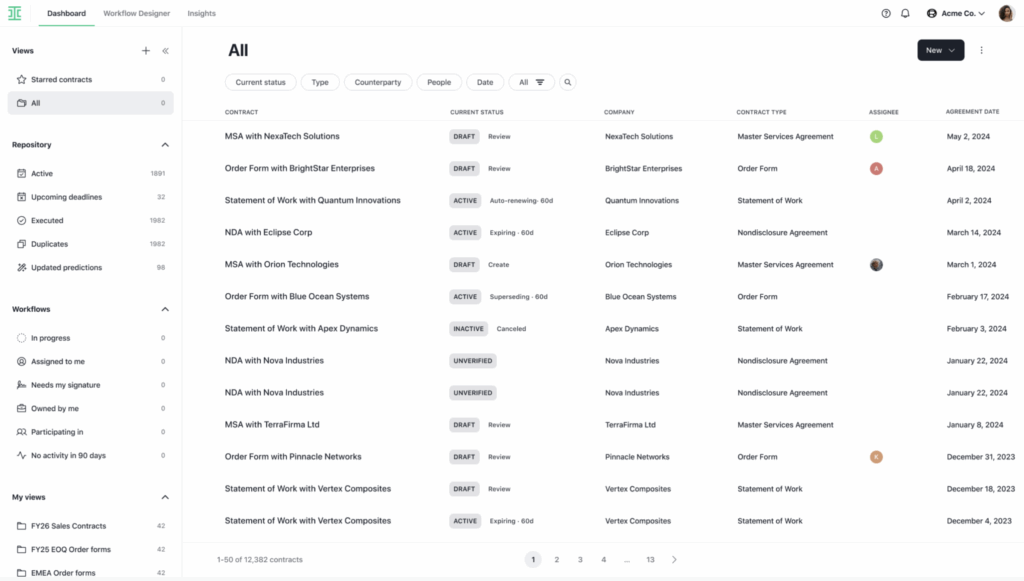
Tom also kept a shared tracker between the teams live and up to date—easy to do in a contract lifecycle management system—so that legal had visibility continually on important, urgent tasks from procurement without needing a formal touchbase every single week.
In this case, over communicating to the legal team can smooth the pathways later, when you need someone to pump the brakes on a new tool that doesn’t quite meet your standards—or you just need more time for review. That way, too, legal doesn’t get surprised, and they can let you know of any resource conflicts or bottlenecks that may slow things down on their end.
Develop relationships outside of day-to-day tasks
However, Tom encourages folks to go beyond just transactional, business discussions with legal counterparts, and instead build a real relationship. “We fall into this trap of being so busy that if we don’t stop and actually check in with them as people, we’re going to miss their perspective,” says Tom. “At Clark’s, I used to go for coffee with my counterpart in the legal team just to get to know them better. We’re still friends to this day.”
Rather than catch up in small talk between meetings, making your 1:1s more casual allows you to connect as people. That’s what helps you build a bond.
Loop in legal ASAP, especially when stakeholders don’t
One of legal’s biggest frustrations, just like in procurement, is that they’re often pulled in too late. If you’re sitting at the table with a stakeholder and realize that legal isn’t there, it can go a long way to make sure they have a seat for the next meeting.
“When I was at Clark’s, they made a decision to reinvest their warehouse management system. This was a huge undertaking that would cost millions of dollars and be hugely important to business operations. I was looped in early, but legal wasn’t,” he says. “I recognized early on that we needed their support. For me, bringing in legal as early as possible gets visibility on those big conversations so the deal could actually happen.”
More importantly, though, doing this set up a long-term partnership for the future.
Beyond the immediate conversations, it also earned me respect from the legal team because it showed them how much I valued their expertise, and so together we were able to be effective partners moving forward.
Tom Millsprocurement protagonist, procure bites
Reach out to your colleagues in legal—you won’t regret it
When in doubt, Tom recommends reaching out to your colleagues. “It comes back to visibility. The more you can give legal context on what the biggest purchases and biggest risks are at the moment, the more aligned you can be,” he says. “A big part of the success in my career came through forging strong, collaborative partnerships with legal, and I would advocate doing that for any procurement professional.”
Read the whole series with procurement expert Tom Mills below:
- How Procurement Influencer Tom Mills Went from Buyer to Head of Procurement to Coach
- The 3 Biggest Challenges Procurement Professionals Faced in 2025—and How to Address Them in 2026
- How to Maximize Your First 90 Days in a New Procurement Org
- Process Before Tech: Why the Fundamentals Matter for Procurement Teams
- Why Procurement Professionals Get Burnout—And What to Do About It
- The Top 7 Negotiation Mistakes Procurement Professionals Make—And How to Fix Them
- People You Meet in Procurement
- These Procurement Horror Stories Could Happen to Anyone
- Spend Management Tips From Procurement Expert Tom Mills
- Procurement Expert Tom Mills on Where AI Is Actually Effective
Ironclad is not a law firm, and this post does not constitute or contain legal advice. To evaluate the accuracy, sufficiency, or reliability of the ideas and guidance reflected here, or the applicability of these materials to your business, you should consult with a licensed attorney.